0% read
on this page
introwhy we built itbuild logproduct detailswhat shippedwhat i'd changemeta
Engineering a workflow where verification outranks confidence.
ai-squad is a structured workflow for AI-assisted development. Its current V3 build phase uses one implementer, executable verification, a fresh-eyes review, and two human checkpoints, with hooks enforcing file scope and git-write rules.
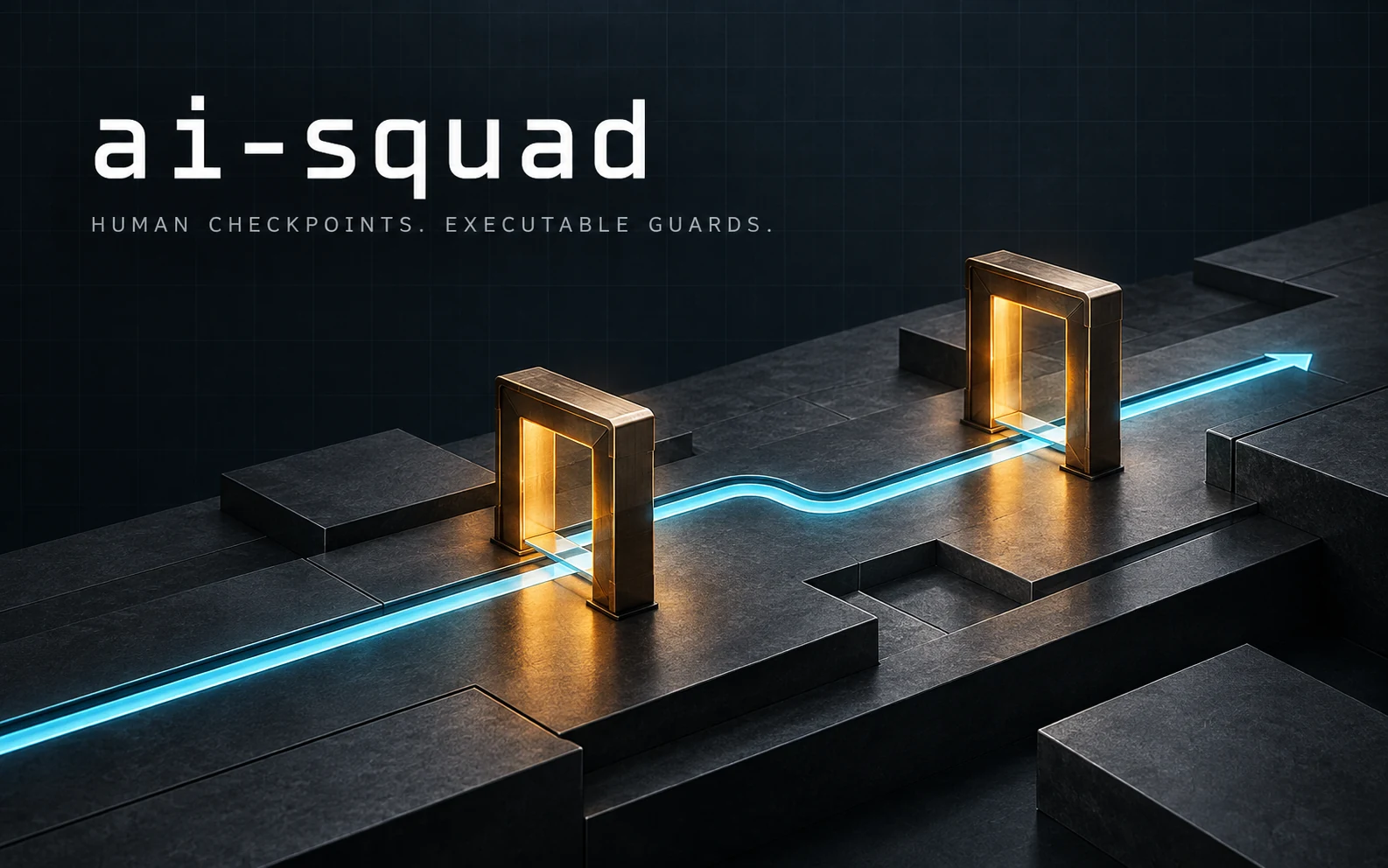
workflow engineering · current V3 architecture
decisions.md (ai-squad)
# challenge, architectural choices, and technical outcomes
focus V3 · scope
context: scope
Turn vague requests into reviewable contracts.
focus V3 · build
context: build
One implementer, one task, one executable check.
focus V3 · guards
context: guards
Move critical rules out of prompts.
selected architecture · 1 deep dive
role / challenge / choices / outcomes
The current path from a fuzzy idea to a scoped, verified change.
My contribution: Product framing, workflow architecture, schemas, hooks, CLI packaging, and migration from the earlier dispatch model.
Editorial workflow diagram
Workflow and real hook execution
technical outcomes
2
connected workflows
1
implementer per task
2
human checkpoints
scoped
mechanical write guards
retrospective.md
An earlier version used a fan-out of implementation agents and reviewers. The project evidence showed substantially higher cost without a measured quality gain, so the local V3 work removed that pipeline. The public repository currently documents the earlier release; this case includes the newer local V3 evolution. The durable idea is smaller: write down intent, constrain scope mechanically, trust executable verification over a model's confidence, and make the final diff a human decision.